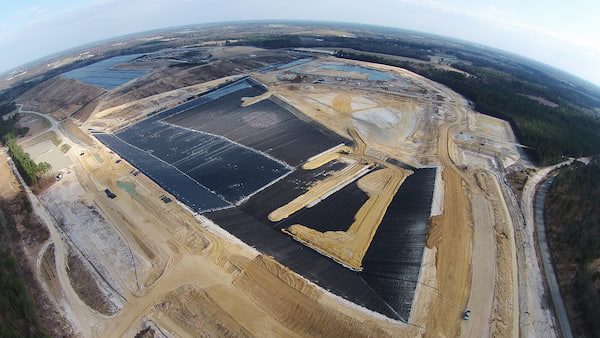
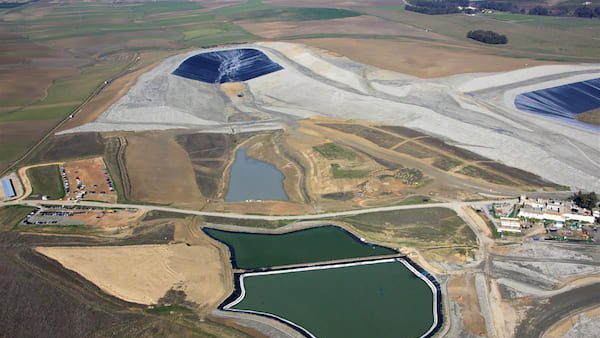
The performance of leach pads (Heap Leach Pads) is based on a designed process that allows the extraction of valuable metals such as gold, copper, and uranium from low-grade ore. Due to its lower cost and acceptable efficiency, this method is widely used in modern mining. The following explains its stages and functionality:
1. Ore Stacking
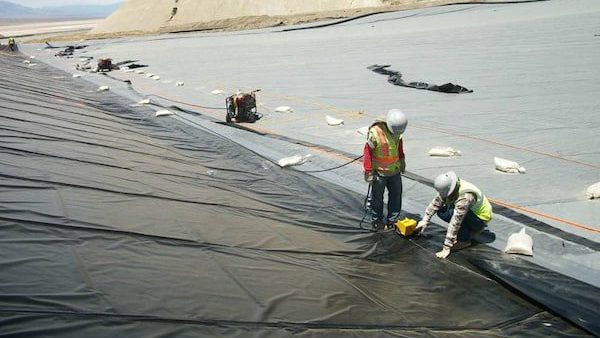
Crushed ore is deposited on the leach pad surface, which is lined with leak-proof geomembrane and geotextile layers. The thickness of this ore pile can reach several meters.
2. Chemical Solution Spraying
The leaching solution (typically sodium cyanide for gold or sulfuric acid for copper) is distributed over the ore pile using a spray system or distribution pipes. The solution gradually percolates through the ore particles.
3. Metal Dissolution
When the chemical solution contacts the ore, valuable metals are dissolved from the minerals and enter the pregnant solution.
4. Leach Solution Collection
Durable geomembranes at the pad base prevent the solution from seeping into the soil, and the solution containing the recovered metals is directed through a drainage system and collection pipes.
5. Transfer to Processing Plant
The metal-rich solution is transported to the processing plant, where the final metal is separated and recovered using methods such as electrolysis, zinc precipitation, or solvent extraction.
6. Solution Recycling
After metal extraction, the remaining barren solution is returned to the cycle and sprayed again on the pad, continuing the leaching process. This practice reduces chemical consumption and enhances economic efficiency.