
Home » Geonet
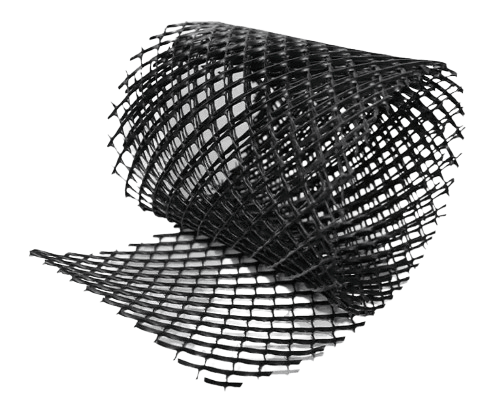
A geonet is a rigid polymeric grid with a bi-planar or tri-planar structure, manufactured from high-density polyethylene (HDPE) or polypropylene (PP). Its primary function is in-plane water flow and rapid drainage under long-term loads. Geonets are typically used as drainage composites in combination with nonwoven geotextiles to simultaneously provide filtration, separation, and drainage.
Common Names: Drainage Geonet, Drainage Net, Geonet, Geo-Drain (market terminology).
High Flow Capacity: The angled rib structure maintains water flow even under high pressure.
Long-Term Durability: Produced from HDPE/PP resins with industrial carbon black for UV and oxidation resistance.
Excellent Chemical Resistance: Compatible with a wide range of acids, bases, and hydrocarbons; ideal for landfills and chemical industries.
Lightweight & Cost-Efficient: An economical replacement for conventional gravel drainage layers; easy to transport and install.
Integration with Other Geosynthetics: Can be used in combination with geotextiles and geomembranes for sealing and leakage-drainage systems.
Fast & Clean Installation: Lightweight rolls, easy cutting and overlapping, minimal need for heavy machinery.
Guide to Selecting the Right Geonet
Required Flow Rate: Calculate based on water inflow, slope, and drainage path length.
Load & Long-Term Settlement: For heavy-load projects (e.g., landfills), use Tri-Planar geonets or creep-resistant grades.
Chemical Environment: In contact with leachate, fuel, or chemicals, select HDPE with stabilizing additives.
Filter Compatibility: For fine soils, geocomposites with nonwoven needle-punched geotextiles on one or both sides are recommended.
Standards & Testing: Technical documents should include tests such as thickness, mass per unit area, in-plane flow/transmissivity under stress and time, and compressive/shear resistance.
Installation & Execution Steps (Step-by-Step)
Subgrade Preparation: Leveling, removal of sharp objects/stones; apply protective geotextile if required.
Roll Deployment: Align with drainage slope to minimize head loss.
Overlap: Typically 10–20 cm (per project specifications).
Joining & Fixing: Use clips/pins or adhesive tape; in composites, geotextiles are stitched or stapled.
Protection & Covering: Apply protective layer (soil, mortar, or lean concrete) as per design details; prevent direct point loads.
Quality Control: Visual inspection, overlap checks, flow testing under defined head at critical areas, and documentation.
Execution Tip: Beneath geomembranes, direct drainage paths toward collection manholes and use sediment traps.
Factors Affecting Geonet Price
Type of polymer and UV package (HDPE/PP and carbon black content)
Structure (Bi-Planar or Tri-Planar), thickness, and mass per unit area
Strength and long-term flow rate under load (specialized grades)
Roll dimensions and custom orders
Order volume and project contracts
Transportation costs and exchange rate fluctuations
Price Ranges (Buying Guide)
Due to market fluctuations, real-time prices cannot be listed here. For a quick updated quotation, please provide the following details:
Project type (landfill, retaining wall, roof garden, road construction, etc.)
Total area and preferred roll dimensions
Operational load and slope
Requirement for geocomposite (geonet with single/double-sided geotextile)
Specific chemical/environmental conditions
Sales Contact: +98-21-xxxxxxx | WhatsApp/Telegram: +98-9xx xxx xxxx | Email: sales@khanjanimpp.com
Note: In many projects, replacing gravel drainage layers with geonets can reduce execution costs by 15–30%, depending on material availability and logistics.
Geonet vs. Other Products
Geotextiles: Primarily for filtration and separation, with lower in-plane flow. Geotextile + Geonet = effective drainage system.
Geogrids: Designed for soil/road reinforcement, not drainage; different function from geonet.
Dimple Sheets: Provide localized vertical drainage along walls; may offer lower flow under high pressure compared to geonets.
Gravel Layers: Heavy, bulky, and site-dependent; geonets are lighter and more consistent in quality.
Why Khanjani Polymer Industries?
Consistent Quality ensured by strict raw material control and regular testing.
Wide Product Range for light to heavy applications (Bi-Planar, Tri-Planar, and geocomposites).
Technical Support in product selection, flow design, and execution details.
Fast Project Delivery and integrated supply of geosynthetics (geomembranes, geotextiles, geogrids, etc.).
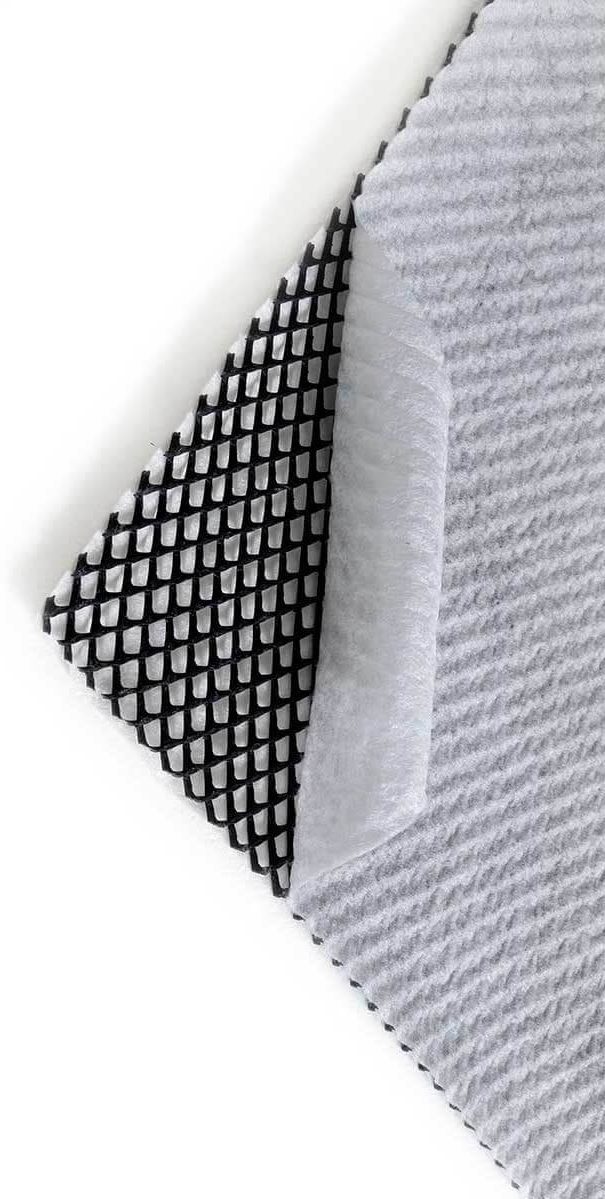
Bi-Planar: Two intersecting layers; economical and efficient for medium loads.
Tri-Planar: Three rib layers with dominant channels in one direction; maintains flow under high loads and low gradient.
Geocomposite Drain: Geonet + nonwoven geotextile on one or both sides for filtration and clogging prevention.
Typical Technical Specifications (Reference Ranges)
The following values may vary depending on the production grade and test standards and are provided for guidance only.
Material: HDPE or PP with UV stabilizer package (Carbon Black ≥ 2%)
Nominal Thickness: Approximately 5 to 10 mm
Mass per Unit Area: Approximately 400 to 1500 g/m²
In-Plane Flow Capacity (Transmissivity) under reference gradient and long-term stress: approximately 10⁻³ to 10⁻² m²/s (depending on type and testing)
Compressive and Creep Resistance: Designed according to operational load and long-term reduction factors (LMCR)
Roll Dimensions: Common widths 2.0 to 3.0 m; roll lengths 20 to 50 m (customizable)
Operating Temperature Range: Approximately –30 to +60 °C (depending on polymer)
Landfills (Waste Disposal): Collection and conveyance of leachate in layers below or above the geomembrane; also used as a gas drainage layer.
Retaining Walls and Slope Stabilization: Drainage behind walls to reduce hydrostatic pressure and increase stability.
Roof Gardens (Green Roofs): Lightweight and uniform drainage layer beneath planting media; protects the waterproofing layer.
Roads and Railways: Drains water beneath pavements and shoulders; reduces fine particle pumping.
Tunnels and Underground Structures: Drainage network behind shotcrete/waterproofing; channels seepage to collection points.
Water Structures and Reservoirs: Leak detection and containment layer between double geomembranes.
Stadiums and Sports Fields: Rapid rainwater drainage to prevent flooding and playing surface damage.
Landscaping and Green Spaces: Drains soil beds, elevated planters, green walls, and flower boxes.
If a suitable filter (geotextile) is selected and proper installation is carried out, the risk of clogging is significantly reduced.
Yes; its light weight, quick installation, and uniform flow make it an ideal choice for green roofs and planter boxes.
Yes; depending on production capacity, the width and length of the rolls can be customized.


ارتباط با مشاورین ما
👋نیاز به راهنمایی دارید؟
کارشناسان صنایع پلیمری خانجانی آماده پاسخگویی به سوالات شما هستند.