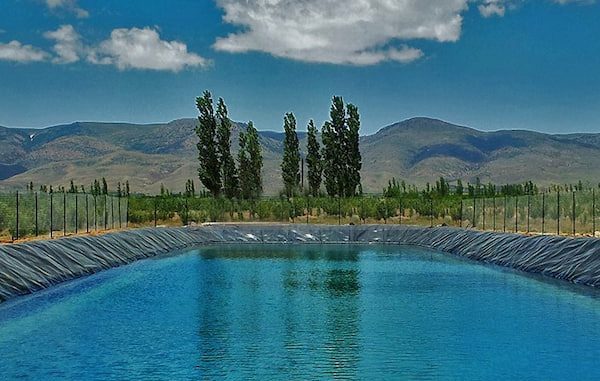
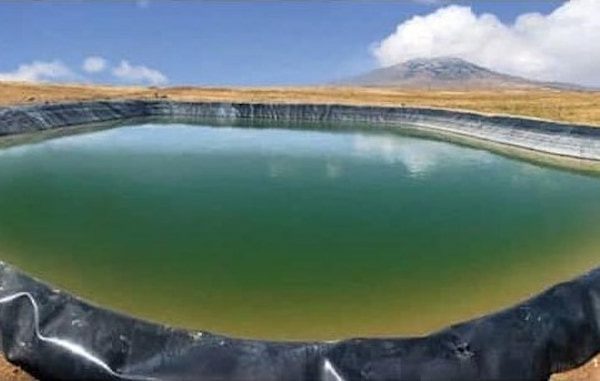
Agricultural Ponds

Agricultural ponds have emerged as one of the most effective solutions for water storage used in crop irrigation, attracting significant attention in recent years. One of the main challenges in utilizing these ponds is preventing water leakage and preserving water quality. In this regard, the use of modern technologies such as geosynthetics—particularly in the waterproofing of agricultural ponds—plays a vital role in improving performance and reducing costs.

🌿The Application of Geomembranes in the Construction of Agricultural Ponds

Agricultural ponds, serving as water reservoirs, enable farmers to secure the necessary water for irrigating their crops during dry seasons or periods of drought. These ponds are particularly important in arid and semi-arid regions where surface water resources are limited.

✔The Advantages of Geomembranes in the Construction of Agricultural Ponds

  • High installation speed (up to 1,000 m² per day)
  • Prevents water loss
  • More cost-effective compared to concrete, stone, and cement
  • Long lifespan of up to 80 years
  • 10-year warranty on products and services
  • Resistant to microorganisms (algae does not adhere)
  • Applicable even in hard-to-access locations

🏭 Khanjani Polymer Industries: A Pioneer in High-Quality Geomembrane Production

Khanjani Polymer Industries, utilizing modern technologies and high-quality raw materials, manufactures HDPE and LLDPE geomembranes. These products, with features such as high resistance to chemicals, UV radiation, and various weather conditions, are an ideal choice for the waterproofing of agricultural ponds.

Method of Constructing a Pond with Geomembrane Sheets

For constructing a pond with geomembrane sheets, the base of the pond is first carefully designed and prepared. This process includes leveling the ground, removing sharp stones, and shaping the soil with an appropriate slope for drainage. Next, a soft sub-base layer—usually consisting of sand, gravel, or geotextile—is placed on the surface to prevent damage to the geomembrane sheet. After that, the geomembrane is carefully laid out according to the pond design, and the sheets are joined together using thermal welding or special adhesives to ensure complete waterproofing. Finally, thorough seam inspection and water-tightness testing are carried out, making the pond ready for filling and use.

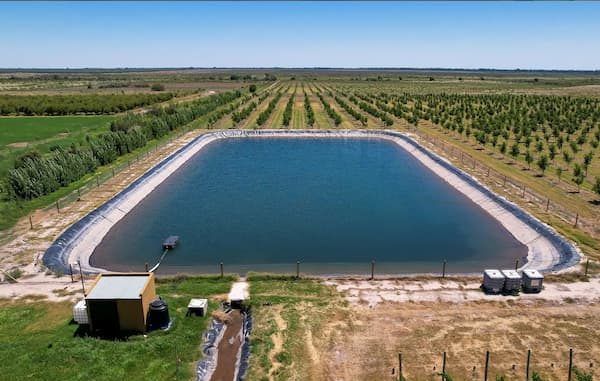
Agricultural Ponds

Pond Calculation Formula

To view the table, please click here for the pond price calculator.

🧱 Geomembrane Technology: A Modern Solution for Waterproofing

In civil and environmental engineering, geosynthetics are used for reinforcement, separation, drainage, stabilization, and waterproofing. In the waterproofing of agricultural ponds, geomembranes serve as impermeable layers, playing a key role.

📈 Impact of Geomembrane Use on Agricultural Productivity

Using geomembranes in agricultural ponds can lead to increased water efficiency, reduced irrigation costs, and improved crop quality. This is particularly important in arid and semi-arid regions where water resources are limited.

🔍 Conclusion

The use of geomembrane technology in waterproofing agricultural ponds is an effective step toward better water resource management and enhanced agricultural productivity. Khanjani Polymer Industries, by offering high-quality products, can be a reliable partner for farmers on this journey.

Contact Polymer Industry Consultants

To receive free expert advice, information about prices, and to place an order, you can contact our experts at Khanjani Polymer Industries.