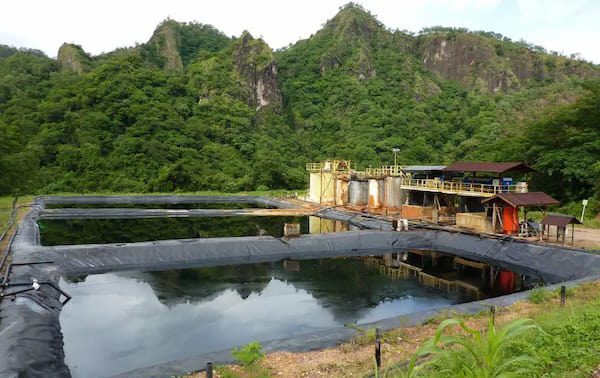
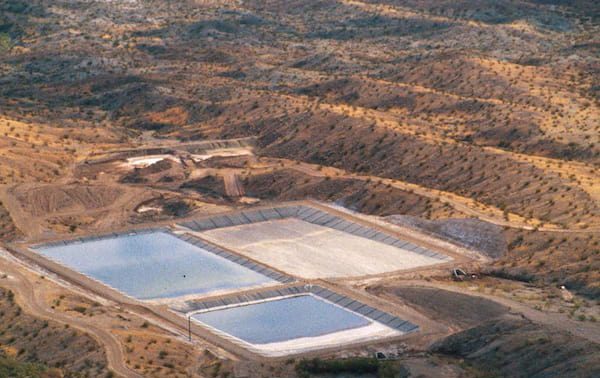
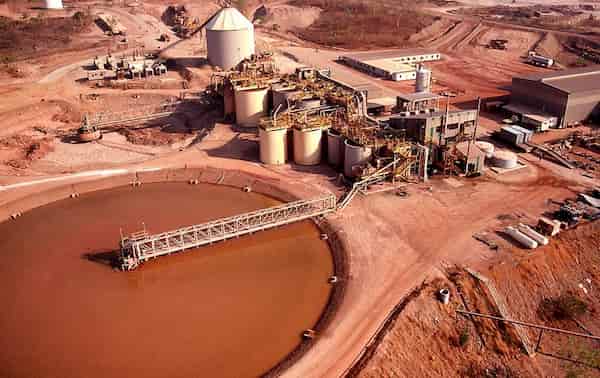
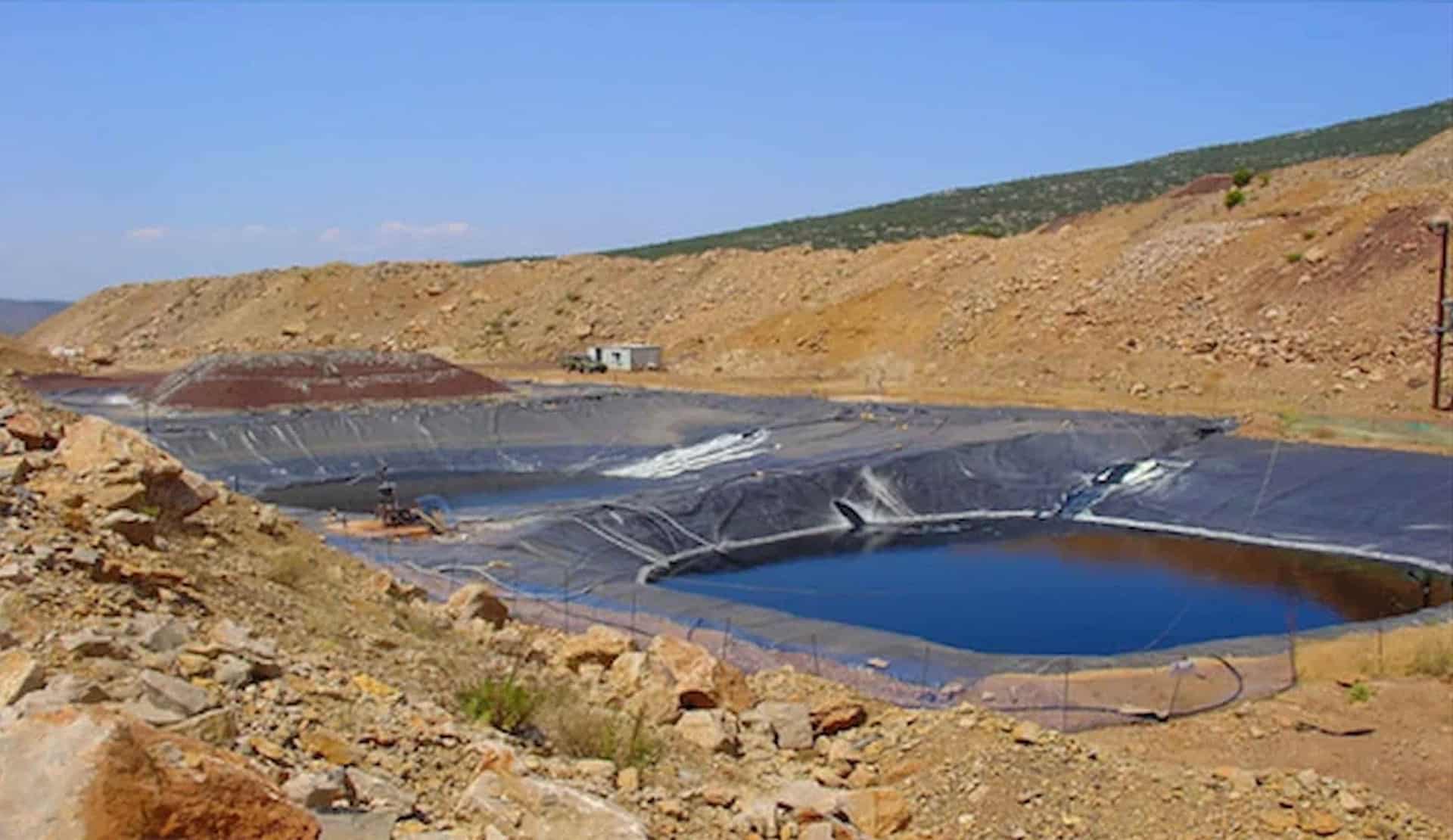
Heap Leach Ponds

“The use of heap leach ponds with geomembrane lining in the extraction of precious metals (such as gold, copper, and silver) at Khanjani Polymer Industries represents a combination of advanced technology and environmental efficiency. In this process, ore is placed on a stable base and irrigated with chemical solutions (such as cyanide or sulfuric acid). The resulting leachate, containing extracted metal ions, is collected by the geomembrane system, preventing infiltration into soil and groundwater aquifers.

🌿 Application of Geomembranes in Heap Leach Ponds

Common geomembranes include HDPE and LLDPE, which provide high chemical resistance, excellent tensile strength, and long service life. These liners deliver reliable performance under harsh environmental conditions, UV exposure, temperature fluctuations, and heavy loads.

Typical systems include:

  1. Single Composite Liner: A layer of compacted soil or GCL (Geosynthetic Clay Liner), followed by the geomembrane, and a protective/drainage layer.
  2. Leak Detection and Monitoring: To prevent leakage, performance testing and inspection systems such as ARC or similar equipment are used.

Overall, the application of geomembranes in heap leach ponds at Khanjani Polymer Industries results in:

  • Preventing leakage of materials and contamination of groundwater resources
  • Enabling recovery of chemical solutions and increasing metal extraction efficiency
  • Reducing environmental risks and enhancing operational sustainability

Heap Leach Ponds

Performance of Heap Leach Ponds with Geomembrane Technology

Heap leach ponds are one of the key methods in the mining industry for extracting precious metals such as gold, silver, and copper. The principle of these ponds is based on the leaching process, where crushed ore is heaped on a base lined with durable HDPE or LLDPE geomembranes and then irrigated with chemical solutions (such as sodium cyanide or sulfuric acid).

Main Process of Heap Leach Ponds

This process consists of several main stages:

  1. Heap Formation:
    Crushed ore is stacked on layers of geomembranes. The geomembranes prevent chemical solutions from seeping into the soil and groundwater.
  2. Irrigation:
    The chemical solution is sprayed from the top of the heap. As it percolates through the crushed ore, it dissolves the target metal ions.
  3. Collection of Pregnant Solution:
    The percolated solution, now enriched with dissolved metals, is collected at the bottom of the heap using a drainage system and geomembrane lining, then transferred to storage ponds.
  4. Metal Recovery:
    The pregnant solution is processed in recovery units (such as activated carbon adsorption, ion exchange, or electrowinning) to separate and extract the precious metals.
  5. Recycling:
    The remaining solution is recirculated back into the irrigation cycle, reducing chemical consumption and increasing efficiency.

Contact Polymer Industry Consultants

To receive free expert advice, information about prices, and to place an order, you can contact our experts at Khanjani Polymer Industries.