1. Subgrade Preparation
The underlying surface must be free of any sharp objects, large stones, and other obstacles to prevent damage to the geomembrane sheets. This step includes leveling and compacting the soil.
2. Cutting and Installing Sheets
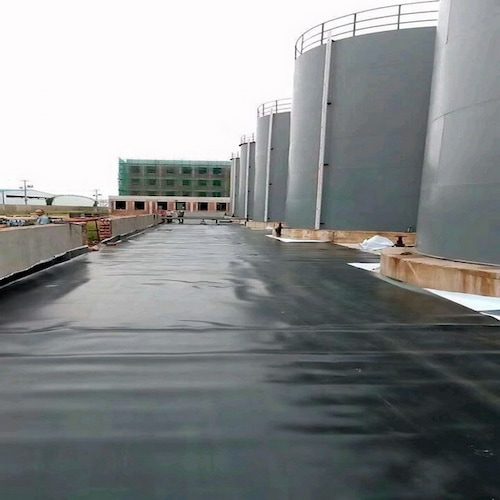
Geomembrane sheets are joined together using thermal welding equipment. At this stage, precise alignment and proper welding are essential to prevent leaks.
3. Installing Special Fittings
At locations where pipes pass through the geomembrane sheets, special fittings called “pipe boots” are used. These fittings are welded to the geomembrane sheets to prevent leaks around the pipes.
4. Weld Quality Testing
After installation, the welds must be inspected using non-destructive methods such as pressure testing or electrical testing to ensure quality and leak-free performance.
5. Final Covering and Stabilization
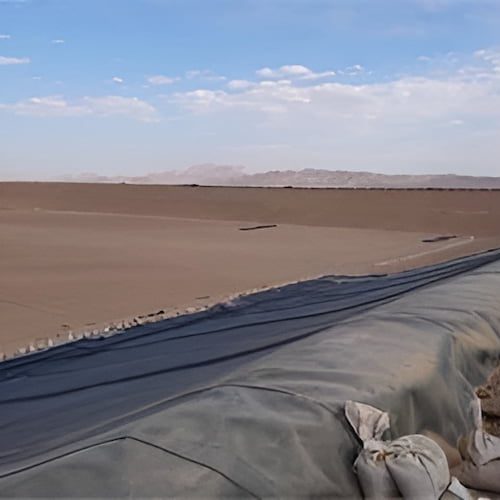
Once installation is complete, the geomembrane sheets are stabilized using materials such as gravel or heavy rubber to withstand wind and other environmental factors.